Redesigning the Life Science Portal
ROLE
Lead UX Designer / Researcher
METHODS
Heuristic Evaluation, Usability Testing, Card Sort, SUS
FOCUS
Information Architecture, Navigation, Content Discovery
Duration
6 Months
TOOLS
Userlytics, HotJar, Figma, Miro, Drupal
Redesigning the Life Science Portal
Using heuristic evaluation and usability research to transform a complex content experience into a clearer, more intuitive platform.
I led UX research and redesign efforts for the Leica Biosystems Life Sciences Portal, beginning with an expert evaluation of the existing experience to uncover usability, navigation, and information architecture issues.
The findings informed subsequent usability testing and provided an evidence-based foundation for redesigning the portal's structure and experience.
01 / THE CHALLENGE
The Challenge
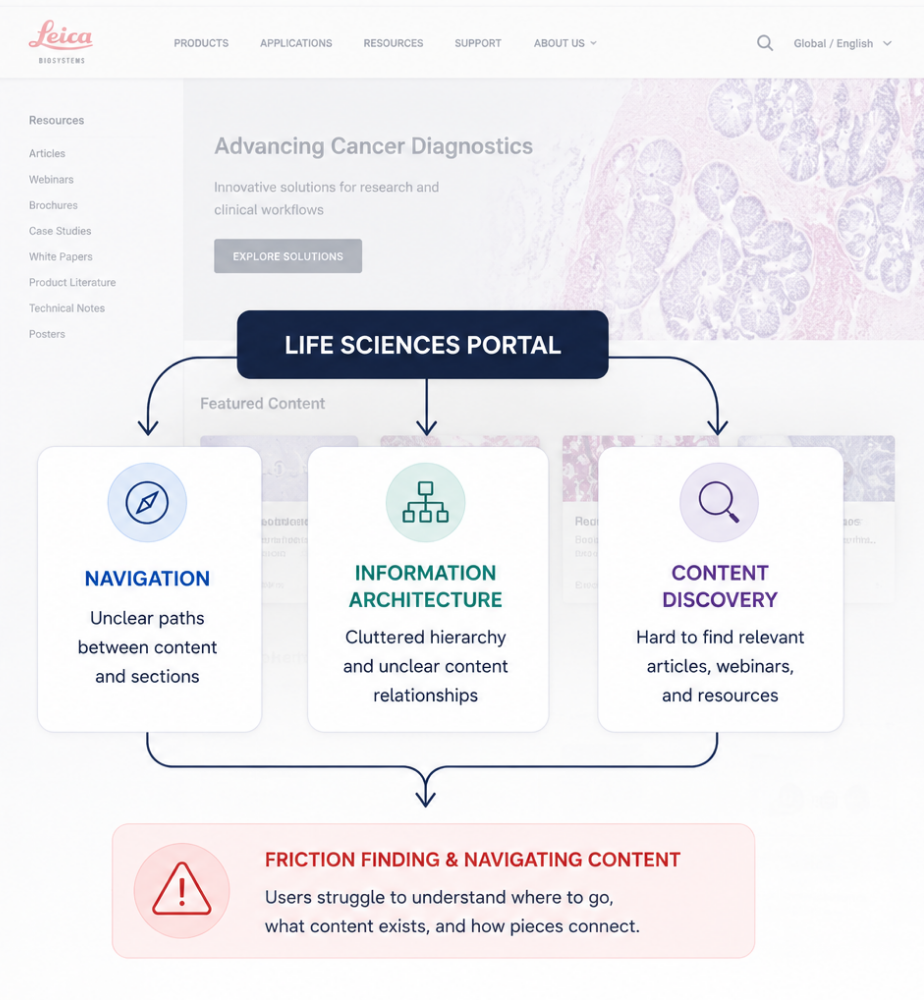
The Life Sciences Portal brought together scientific articles, webinars, applications, resources, and research solutions—but the experience lacked a clear and consistent structure for navigating and discovering that content.
Before redesigning the interface, I needed to understand where the existing experience was creating friction, which problems had the greatest impact, and how the portal could better organize and connect its content.
THE UX QUESTION
How might we make complex scientific content easier to discover, understand, and navigate?
04 / AUDITING THE EXISTING EXPERIENCE
Auditing the Existing Experience
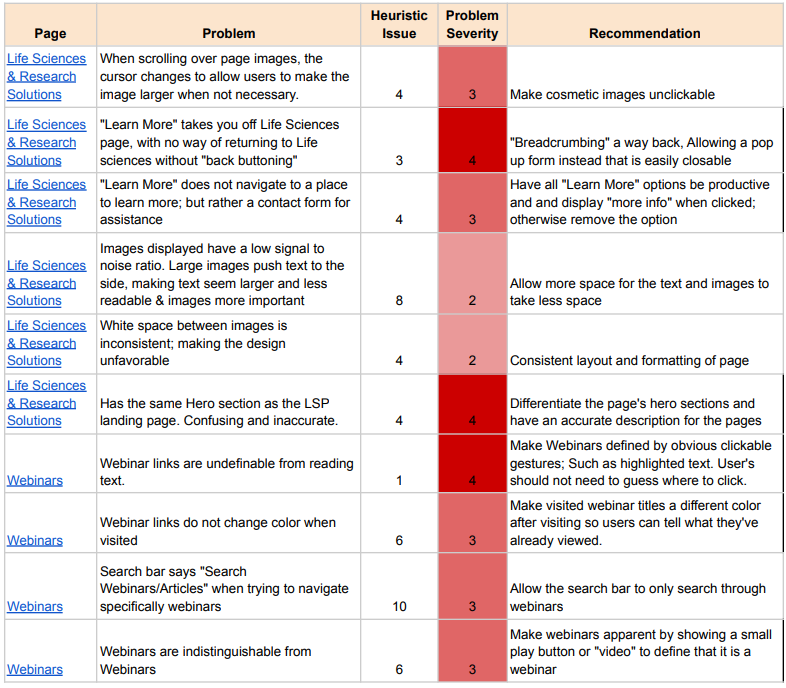
I began with a heuristic evaluation of the existing Life Sciences Portal using Nielsen’s 10 Usability Heuristics as the evaluation framework.
I reviewed the portal’s navigation, layout, functionality, content, and interaction patterns, documenting usability violations and assigning each issue a 0–4 severity rating based on its impact on the experience.
This created a structured inventory of usability problems that could be prioritized and further investigated through usability testing.
EVALUATION FRAMEWORK
Nielsen’s 10 Usability Heuristics
Severity Rating: 0 — 4
03 / CONDUCTING THE RESEARCH
Conducting the Research
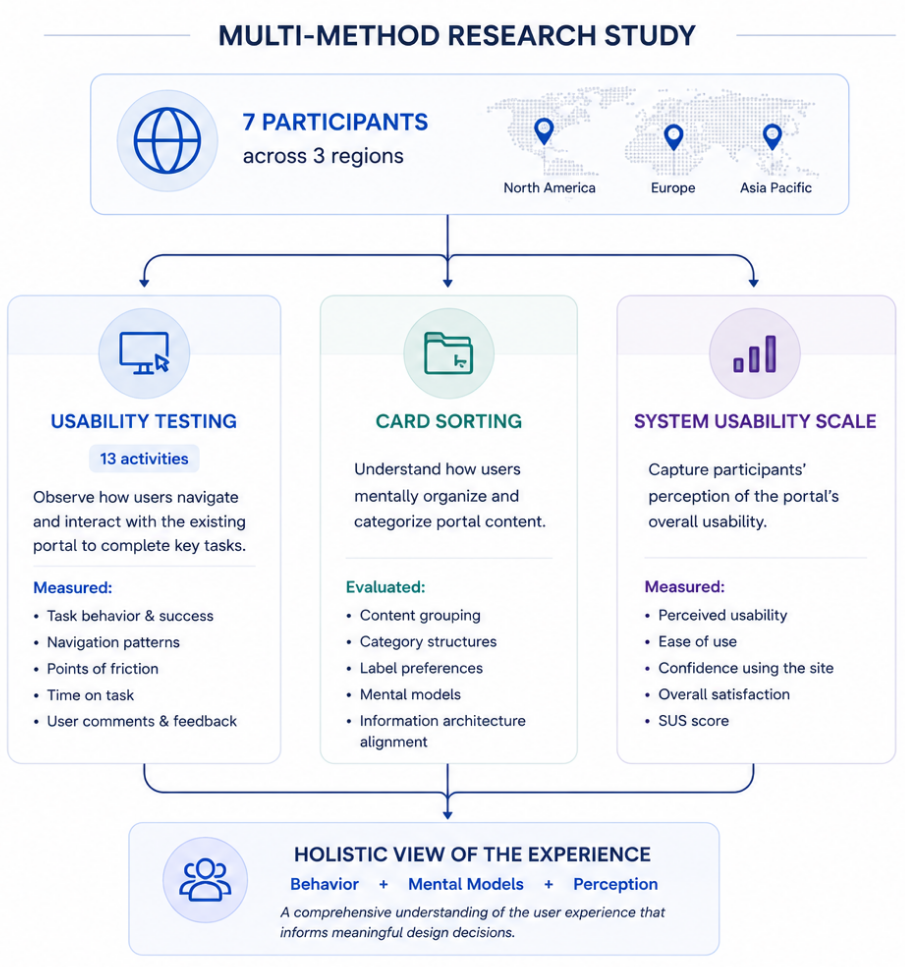
Following the heuristic evaluation, I designed a multi-method usability study to understand how users navigated the existing Life Sciences Portal and where the experience created friction.
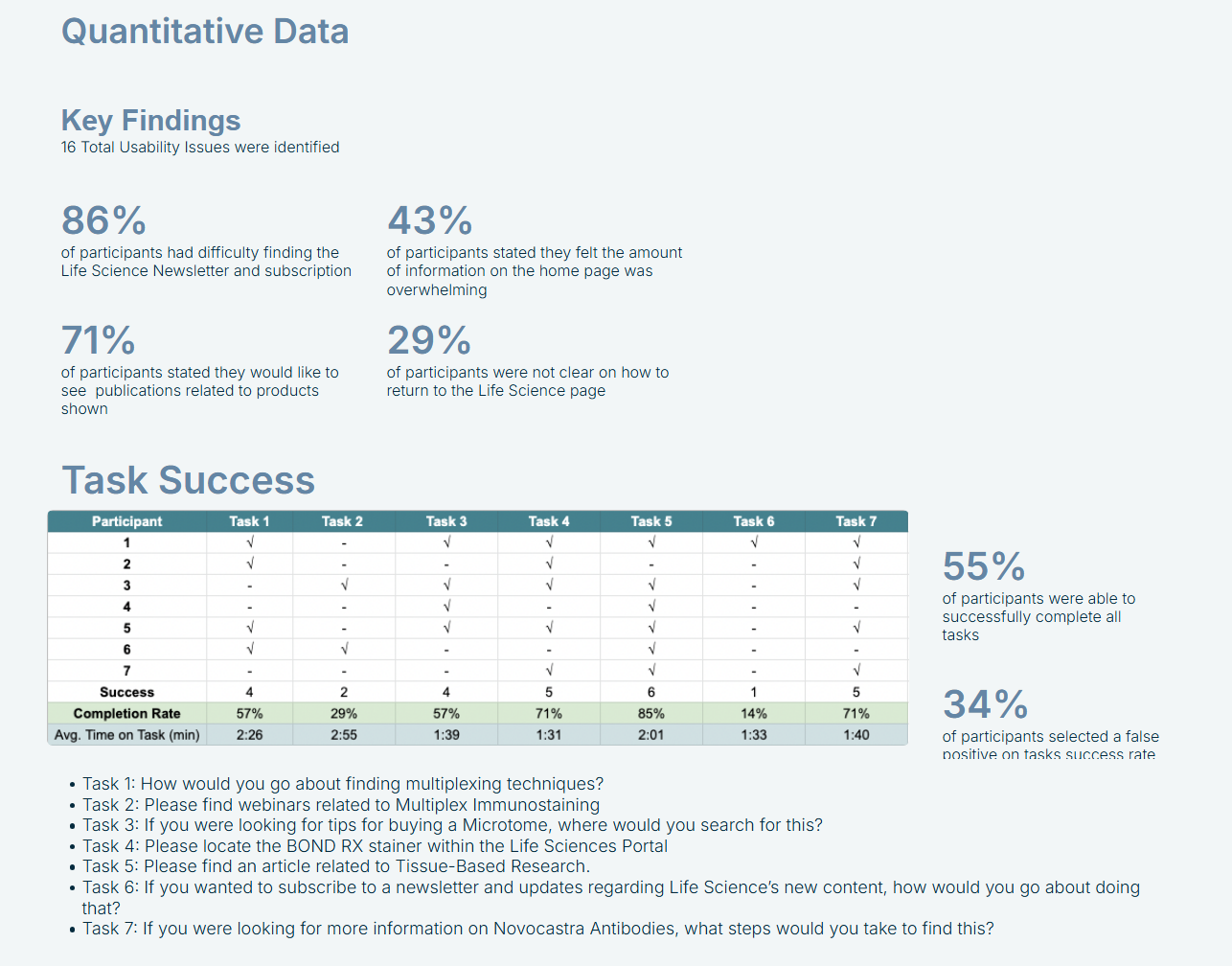
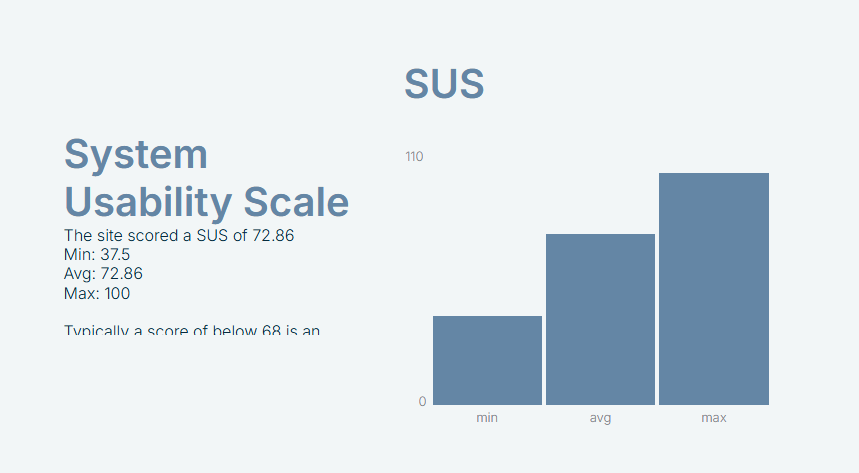
I conducted research with 7 users across 3 geographic regions, giving participants 13 activities to complete across the existing experience. The study combined usability testing, card sorting, and the System Usability Scale (SUS) to evaluate both behavioral and attitudinal aspects of the experience.
Using multiple research methods allowed me to evaluate not only whether users could complete key activities, but also how they understood the portal's content structure and how they perceived the overall usability of the experience.
7 USERS
Across three regions and 4 key segments
13 ACTIVITIES
Across the existing portal
3 METHODS
Usability Testing · Card Sorting · SUS
04 / SYNTHESIZING FINDINGS
Synthesizing Findings
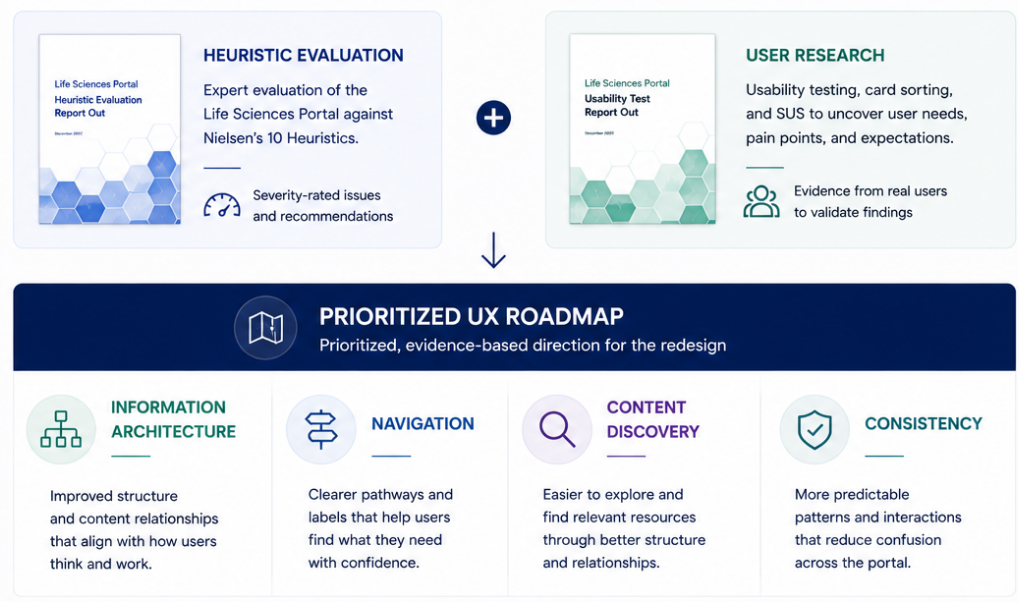
After completing the study, I brought together findings from the heuristic evaluation, usability testing, card sorting, and SUS to identify patterns across the experience.
Rather than treating each usability issue independently, I looked for recurring problems that could explain where and why users were experiencing friction.
The findings pointed to broader opportunities across the portal's navigation, information architecture, content hierarchy, interaction patterns, and content discovery.
THE SHIFT
From individual usability issues → to systemic experience problems.
05 / PRIORITIZING THE REDESIGN
Prioritizing the Redesign
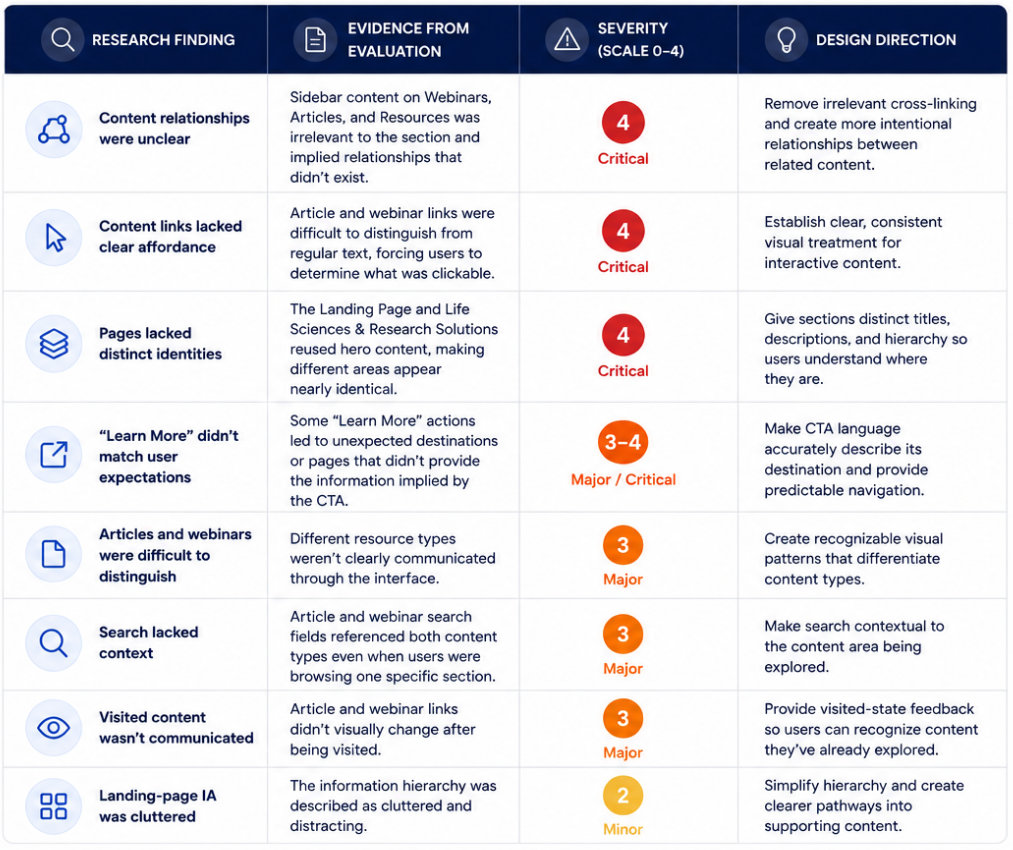
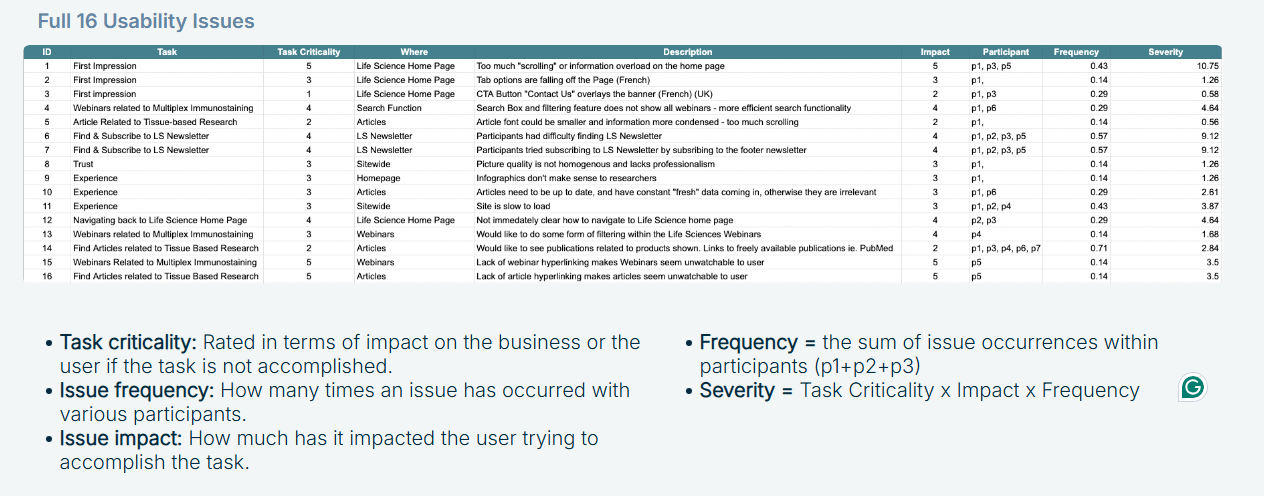
The research uncovered usability issues across multiple areas of the portal, but not every problem had the same impact on the experience.
I used an issue severity scale to evaluate and prioritize the findings, helping distinguish minor usability concerns from issues that created significant barriers for users.
This prioritization gave me a structured way to determine which problems should be addressed first and helped translate a large set of research findings into a focused redesign strategy.
THE GOAL
Focus redesign efforts on the issues creating the greatest impact on the user experience.
06 / RESTRUCTURING THE INFORMATION ARCHITECTURE
Restructuring the Information Architecture
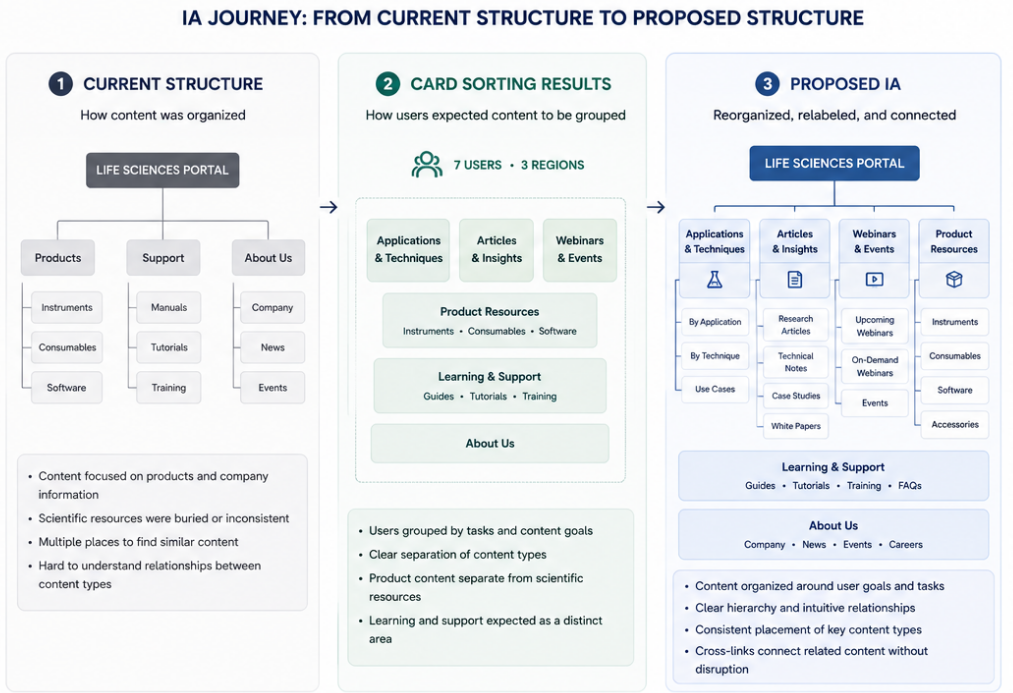
The research showed that several usability issues originated in the way content was organized and connected—not just how individual pages were designed.
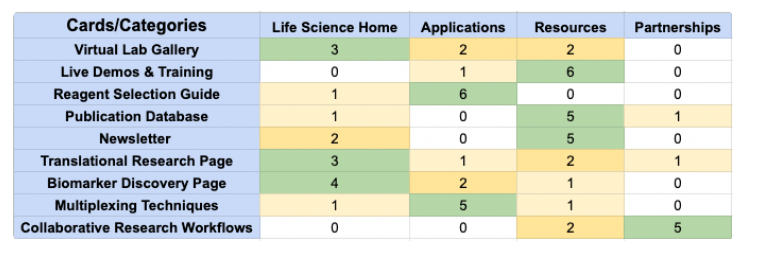
Using findings from usability testing, card sorting, and the prioritized issue list, I re-evaluated how content should be grouped, labeled, and surfaced throughout the Life Sciences Portal.
The goal was to create a structure that better aligned with users’ expectations while making it easier to understand where content lived and how different resources related to one another.
DESIGN PRINCIPLE
Fix the structure before refining the interface.
07 / TRANSLATING RESEARCH INTO DESIGN DIRECTION
Translating Research into Design Direction
With the highest-impact usability issues identified and prioritized, I translated the research into actionable recommendations for the redesign.
Each recommendation was tied back to a specific problem uncovered through the heuristic evaluation, usability testing, card sorting, or SUS—ensuring the proposed experience addressed demonstrated user needs rather than assumptions.
This created a clear bridge between research findings and the direction of the redesign.
DESIGN APPROACH
Every recommendation should trace back to evidence.
08 / DELIVERING THE RECOMMENDATIONS
Delivering the Recommendations
The final deliverable brought the research, usability findings, severity assessments, and design recommendations together into a comprehensive report-out for the team.
Rather than presenting usability issues in isolation, I connected each finding to its impact on the experience and provided actionable recommendations for improving the portal’s navigation, information architecture, content hierarchy, and interaction patterns.
This gave the team a prioritized roadmap for approaching the redesign and a research-backed foundation for future design decisions.
FINAL DELIVERABLE
Research findings → Prioritized issues → Actionable UX recommendations
09 / OUTCOME & IMPACT
Outcome & Impact
The project transformed a broad redesign request into a structured, evidence-based understanding of where the Life Sciences Portal was creating friction and what needed to change.
By combining heuristic evaluation, usability testing, card sorting, SUS, and severity-based prioritization, I identified both individual usability issues and the larger structural problems behind them.
The final recommendations gave the team a clear foundation for improving the portal’s information architecture, navigation, content discovery, and interaction patterns—ensuring future design decisions could be traced back to research rather than assumptions.
THE OUTCOME
A prioritized, research-backed direction for creating a clearer and more usable Life Sciences Portal.
LOWER IMPACT → HIGHER IMPACT
0 No issue → 1 Cosmetic → 2 Minor → 3 Major → 4 Critical