Designing 0-1 Generative AI SaaS Platform
Designing 0-1 Generative AI SaaS Platform
Turning an early-stage concept into a structured product for generating, managing, and expanding AI-powered business reports.
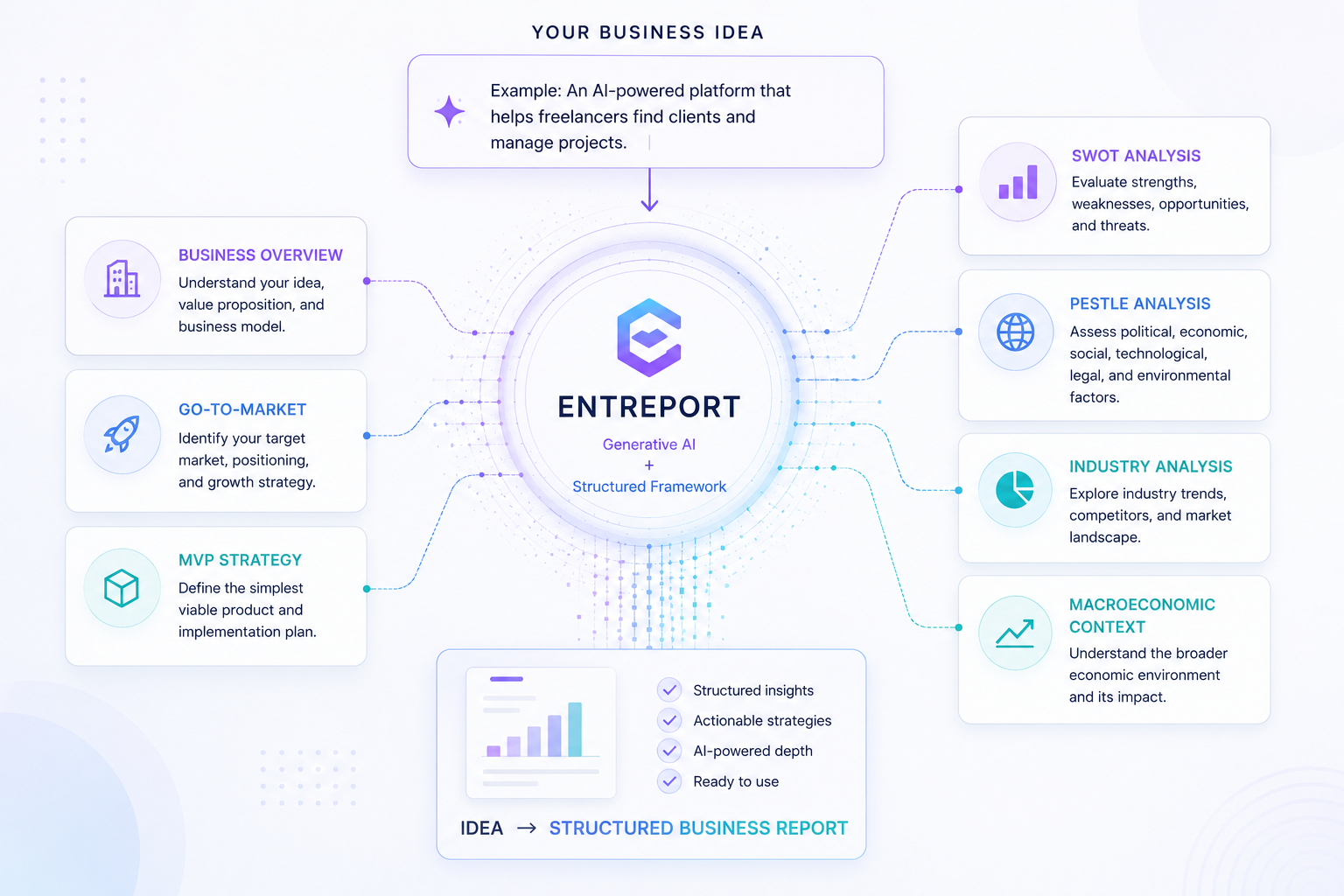
Entreport began as an idea: use generative AI to help aspiring entrepreneurs and business owners transform early-stage ideas into structured, actionable business reports.
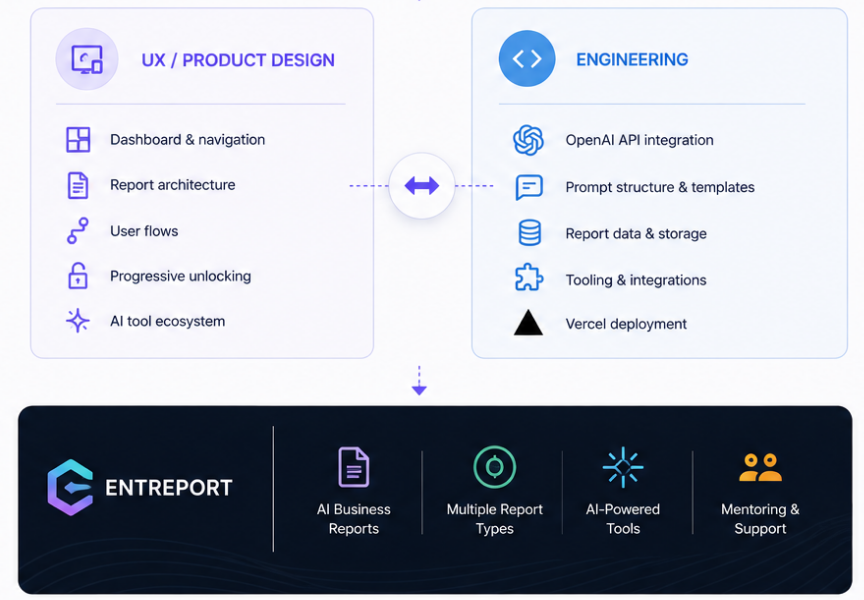
Working directly with the engineering team, I helped translate that concept into a SaaS product experience, designing the dashboard and core workflows while accounting for the technical requirements of an AI-powered platform.
The resulting product centered around a flexible report system where users could generate, save, and expand business plans while accessing additional AI-powered tools built around their report data.
01 / FROM CONCEPT TO PRODUCT
From Concept to Product
When I joined Entreport, the product existed primarily as a concept: use generative AI to help people evaluate and develop business ideas.
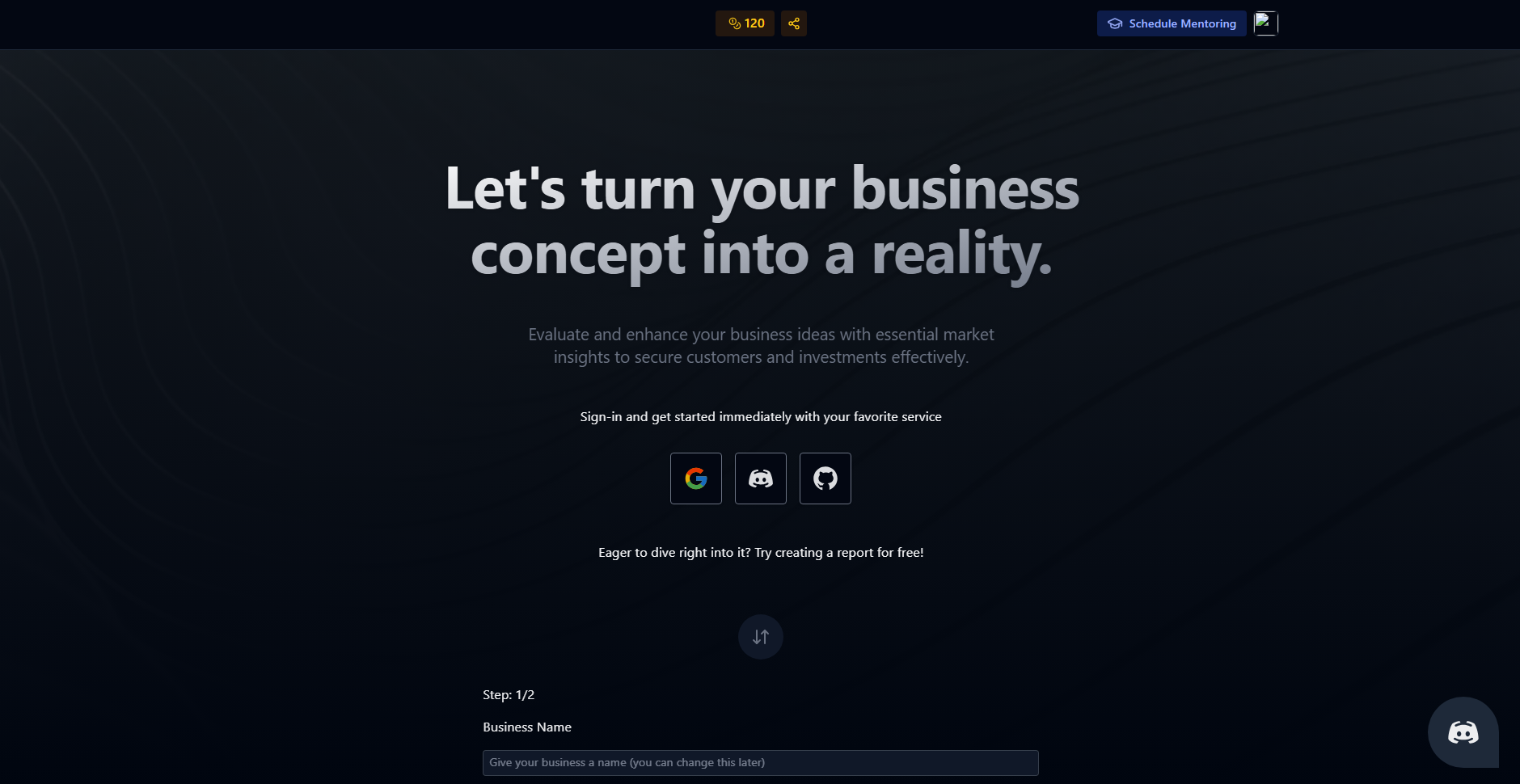
The challenge was turning that idea into a structured SaaS experience. Rather than presenting users with an open-ended AI prompt, the product needed to guide them through creating something tangible: a business report they could save, revisit, expand, and use as the foundation for additional business tools.
I worked alongside engineering to understand how the underlying AI capabilities and technical requirements could translate into an intuitive product structure.
THE PRODUCT QUESTION
How do we turn an open-ended AI capability into a guided experience that helps users move from an idea to an actionable business plan?
02 / STRUCTURING THE SAAS EXPERIENCE
Structuring the SaaS Experience
As the concept evolved, the experience needed to support more than generating a single report. Users needed a place to manage their work, return to previous ideas, explore different report types, and use their reports as the foundation for additional AI-powered tools.
I helped structure the SaaS around a central dashboard where users could access saved reports and move between different parts of the product. The experience expanded beyond traditional business reports to support outputs such as funding paths and project management blueprints.
The same report data could also power additional tools, including pitch deck generation, risk assessment, and LinkedIn content, creating a connected ecosystem rather than a collection of isolated AI prompts.
THE UX PRINCIPLE
Create once → build from it across the product.
03 / DESIGNING THE AI REPORT EXPERIENCE
Designing the AI Report Experience
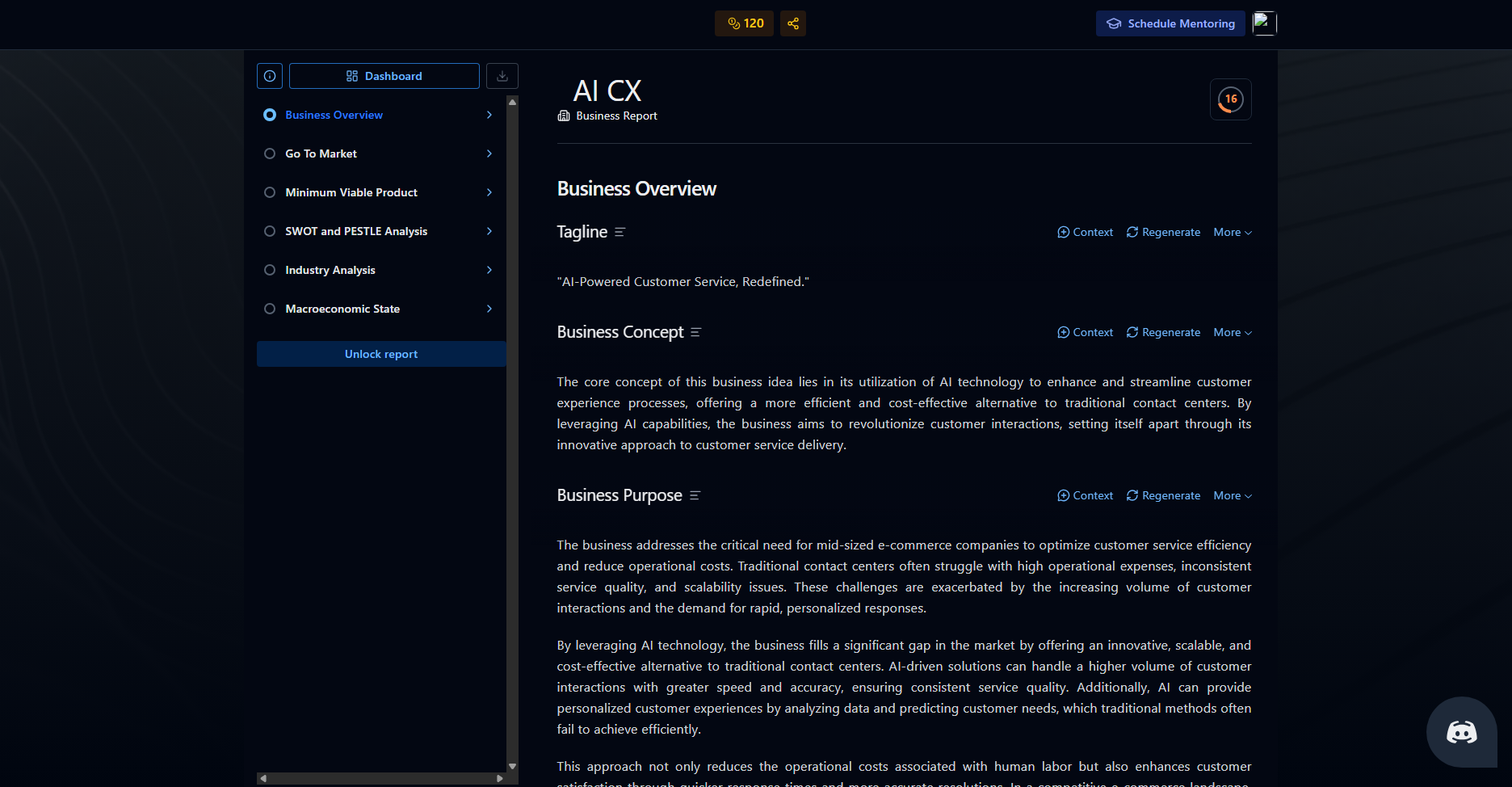
A key design challenge was making a large AI-generated business report feel manageable rather than overwhelming.
I structured the report experience into distinct sections, such as Business Overview, Go-to-Market, MVP planning, SWOT and PESTLE analysis, Industry Analysis, and Macroeconomic State—allowing users to navigate the report as a series of focused topics instead of one continuous AI response.
Within each section, generated content was broken into smaller business concepts and actions, giving users more control over how they reviewed and refined the AI's output.
THE DESIGN PRINCIPLE
Turn a large AI-generated response into a structured, navigable workspace.
04 / DESIGNING THE BUSINESS MODEL
Designing for a Scalable SaaS Model
Entreport needed a way to let users experience the value of an AI-generated report while creating a natural path toward accessing deeper analysis.
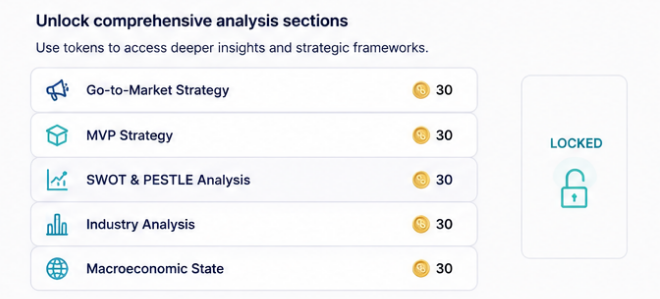
The product used a token-based model that allowed users to unlock additional sections and capabilities as they developed their business report. I incorporated this model into the experience so access, report progress, and additional functionality could exist within the same workflow rather than interrupting it.
This created a product structure that could grow alongside the platform, supporting additional report types, AI-powered tools, and services without changing the core experience.
THE PRODUCT PRINCIPLE
Let users experience value first, then progressively unlock deeper capabilities.
05 / FROM DESIGN TO WORKING PRODUCT
From Design to Working Product
Because Entreport was being built from the ground up, design decisions were closely tied to technical feasibility.
I worked directly with engineering to understand how the product could use generative AI, structured prompts, and report data to support the experience we were designing. That collaboration helped define what could be generated, how users would move through report sections, and how additional tools could reuse information already created within the platform.
The early product was built around an OpenAI-powered generative AI system and deployed through Vercel, allowing the team to rapidly turn the concept into a functioning SaaS product.
THE COLLABORATION MODEL
Product concept → UX structure → technical requirements → working experience
ROLE
UX / Product Designer
Product
Generative AI SaaS
STAGE
0-1 Product Development
FOCUS
Product Architecture, UX Design, AI Workflows, Dashboard Design